Sunday, September 6, 2015

Far Shore of Aging - Mark 4:35-44

The Far Shore of Aging - Mark 4:35-41


A college football player had to skip some of practice everyday to go see his father in the hospital, He’d been in the hospital for some time now...awaiting a heart transplant..
We live in a period of a new old age.


A mother who is also a grandmother is preparing for a lengthy time away, as her mother has taken a turn and is needing more help.  She is not sure what this means for her, what her responsibilities may be in the near future..
we live in a period of a new old age.

Parents sit down with their adult children to talk to them about things to consider as they get older, their desires, plans they are making, and who might take on what responsibilities.  
One of the children gets up and leaves during the conversation.

After a recent cancer diagnosis, adult children attempt to talk to their parents about what they may be thinking down the road for care. The parents change the subject.

We have entered into what has been called a period of a new old age.

So much about how life is lived has changed in the past 100 years.
One significant change taking place before us is the nature of aging.

Like all changes, this has an upside and a downside.


Blogger and author Jane Gross has reflected a lot on this new reality of aging.  

She wrote a memoir entitled A Bittersweet Season: Caring for our aging parents--and ourselves, which she wrote as her mother went through a long decline after her mid-80s.
Jane Gross says poignantly: "We live too long and die too slowly."

Jane Gross, born in 1947, doesn’t remember a lot of older people around when she was growing up.  By the time she was born, only two of her four grandparents were alive. One died suddenly; he had been a vibrant man and then, kerplunk, in the street the next day.  
This is how my great-grandfather died as well. literally, from vibrant getting around to Kerplunk in the street.

Fast forward to 20 years or so later to the time when my grandparents were dying, and these were long drawn out deaths, thanks to so-called “advances” in medicine.
My grandfather, for example had a living will, had a heart attack when he was 93, but they resuscitated him anyway, and he spent his last several months of life in hospice care, during a period he called, the worst days of his life.  

I have visited with any number of parishioners who are living this new old age reality, they or their relative is living this in-between time that didn’t used to exist to the extent that it does now, and we are all trying to make sense of it.

I loved visiting with Alice Martinez of my church in Santa Fe who was 95 when I met her. She would insist I visit her once a week to plans her funeral. She would tell me, “I’m dying.” If her daughter, a nurse and the primary caregiver was there she would say, “Mom, you’re not sick, your heart is healthy; You’ve got to die of something!”

When considering this new old age reality the first question we have to ask:
Is it okay to talk about this topic of aging and dying?

Something everyone can relate to, but not everyone wants to acknowledge.

When geriatrician, Joanne Lynn asks her audiences of health experts: "How many of you expect to die?" Not everyone shoots up their hands!

In the period of a new old age --  
Everybody wants to believe that we are going to be perfectly healthy, climbing the Himalayas one day and dead the next.

But the reality is something like what Jane Gross experienced with her mother who was fine and independent and then in 100 small ways, none of which were going to do her in, was not fine and became dependent on other people, strangers, her children.  

Friday, August 14, 2015

Cuba - Let's Learn While We Still Can

"The Great Turning"
Challenge yourself to imagine:

"It is the year 2275. 500 years after the birth of the social experiment in 1776
known as the United States of America, and I can assure you - life is good.  The Great Turning,
as depicted by Joanna Macy, has actually happened: we humans have learned to thrive without
utterly destroying ourselves or our precious habitat. God’s longstanding desire to make 'earth as
it is in heaven' is coming closer to reality, thanks to an amazing collaboration between spirit, earth, and humanity. From 2275, going back 250 years to 2025—the midpoint in the life of the USA—the human experiment was looking bleak. We humans were heading down a path toward annihilation--
extreme economic inequity, violent competition for dwindling resources, cultural colonization,
unsustainable practices and environmental devastation were driving our species, and many
others, to extinction. Despite the advanced technologies and richness of the planet, billions of
people were impoverished, many were desperate. The very life systems of our planet were being
threatened.

"Amazingly, we changed our path and learned to honor one another and the earth. It took 250
years, but look at us now in 2275! Who knew, from the challenging situation we faced in the
early part of the 21st century, that we would end up with healthy abundant local food for
everyone—with food systems that provide fair compensation, retained cultural diversity and
ecologically sustainable.  How humans came to this new food reality in 2275 is an incredible story. " (- reflection from Andrew Kang Bartlett, of the Presbyterian Hunger Program).

As I considered the impossibility (and I think I'm a bit of an optimist) of this idyllic scenario recently with a small group of people of faith, it occurred to me that something really could lead to this huge change necessary to take us in that direction; and it has the potential to happen right now.

Cuba. 

Normalization...?
Secretary of State, John Kerry is in Cuba today Friday August 14 to raise a US flag at the once de facto and now actual U.S. Embassy whose location is signaled by Cuban forefather at the Tribuna Anti-Imperialista or Anti-Imperialist Platform.  The Cuban Embassy in the United States was just opened weeks ago. 

As relations are "normalized" between the two nation states, it is easy to imagine the policies and social practices of the US will have a much greater impact on Cuba than will policies and social practices of the socialist island nation. But, Cubans have a strong proud history of resistance, and they will not easily succumb to that which they perceive to be good for their society. 

A brief history: After the Cuban revolution claiming independence from Spain around the turn of the 20th century, interest groups from the United States began to harvest the "fruit" of Cuba. By the 1950s, the U.S. fully supported an oppressive government led by President Batista. Poverty and crime were rampant, health care and education were accessible for only the rich, and economic disparity was widespread. US corporations and citizens owned a great majority of the island's land and resources. The people of the island were overlooked and/or exploited, as was the case on other islands in the Caribbean. A bold revolt took place led by a young lawyer named Fidel Castro. It's beginnings on the Granma were humble, even laughable, seemingly posing little threat as they gathered in the remote western mountains on the island. But slowly, as the group made its way toward the capital, people joined in and a force was mounted strong enough to overthrow the existing Batista government. During the years of revolt, the US government was unsure which party they should support, so they supported both. 

Castro and his rebel group claimed power 1 January 1959. Initially, when Fidel Castro claimed power, he was cautiously embraced by the US government and President Eisenhower .  But, as, he and his appointed ministers began to implement sweeping reforms, nationalizing many of the major industries, and eventually converting almost all major interests, to ownership by the commons or the state, meaning US entities no longer had ownership or profits, US policy shifted dramatically. Most Cuban citizens on the island who opposed losing their property and having their bank accounts ceased by the government fled if they were able to do so with what little they could hold onto. Some who resisted were disappeared or executed. Cuban pastors with connections to US churches through historical relationships fled as well. As one elderly church member in San Antonio de Los Baños told me, "Eran nuestro ejemplo y nos dejaron por el dinero...they [our pastors] were our example, and they left us for money."  This was the case for many who left. I would not have wanted to be in their shoes to have to make that decision in a time of uncertainty and unrest. 

At his famous 1960 UN speech, Castro strongly condemned the pressuring actions of the United States and as a result. This is when he and the people of the island were ostracized in earnest, and the embargo began. The so called "Cuban missile crisis" in 1962 still strikes a nerve of those where were alive at the time to remember it. The discord among governments was uncharacteristically prevalent due to the reality that the island's proximity to the U.S., and yet, Castro and the island was able to successfully implement that which U.S. policy so adamantly opposed during the cold war, something seen as the antithesis of the American way of life - their fledgling version of Communism/Socialism.

For over 50 years, despite sanctions, trade restrictions, threats, even attempted coup d'etat, the United States could not twart the efforts and determination of Castro and the people, Los Revolucionarios.
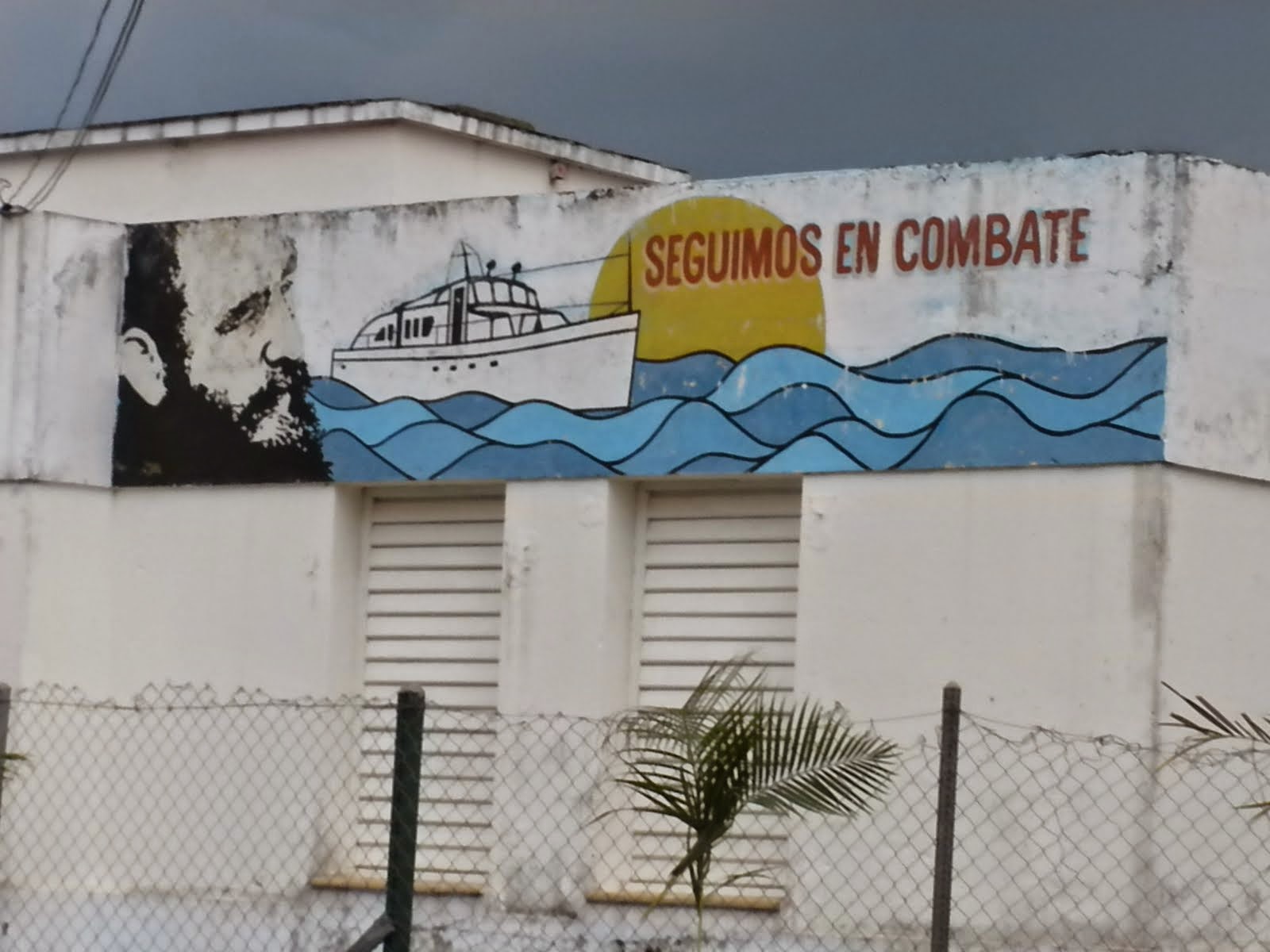
We continue the fight
Image of Fidel Castro and the Granma in the ocean with caption: "Combat continues."

As a result of a concerted effort over the course of decades of formation, a society has emerged with a particular set of values--community, care, health, well-being, good for all, respect, education, as well as remarkably relatively low crime, drug use and violence, and sexism and racism--values well esteemed and desired by many in the world, but have been elusive, especially in the US in recent decades.
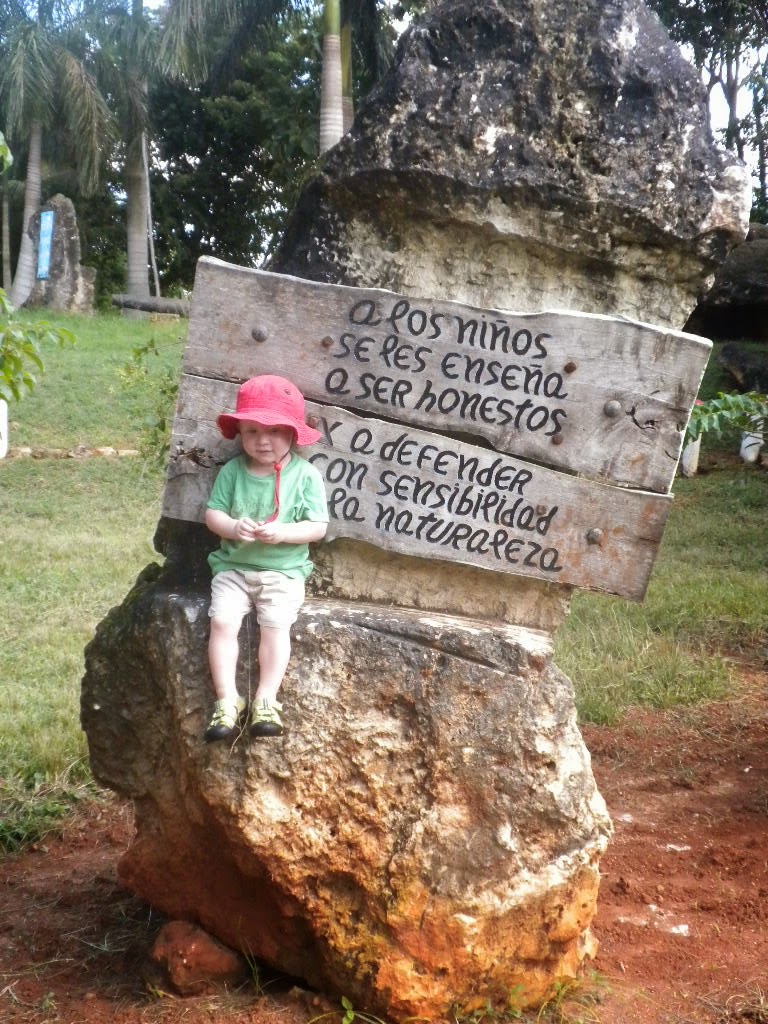
At Bosque Ariguanabo...Teach children to be honest and to defend nature with wisdom
"Teach children to be honest and to defend nature with sensibility." - José Martí, Bosque Martiano, San Antonio de los Baños, Cuba

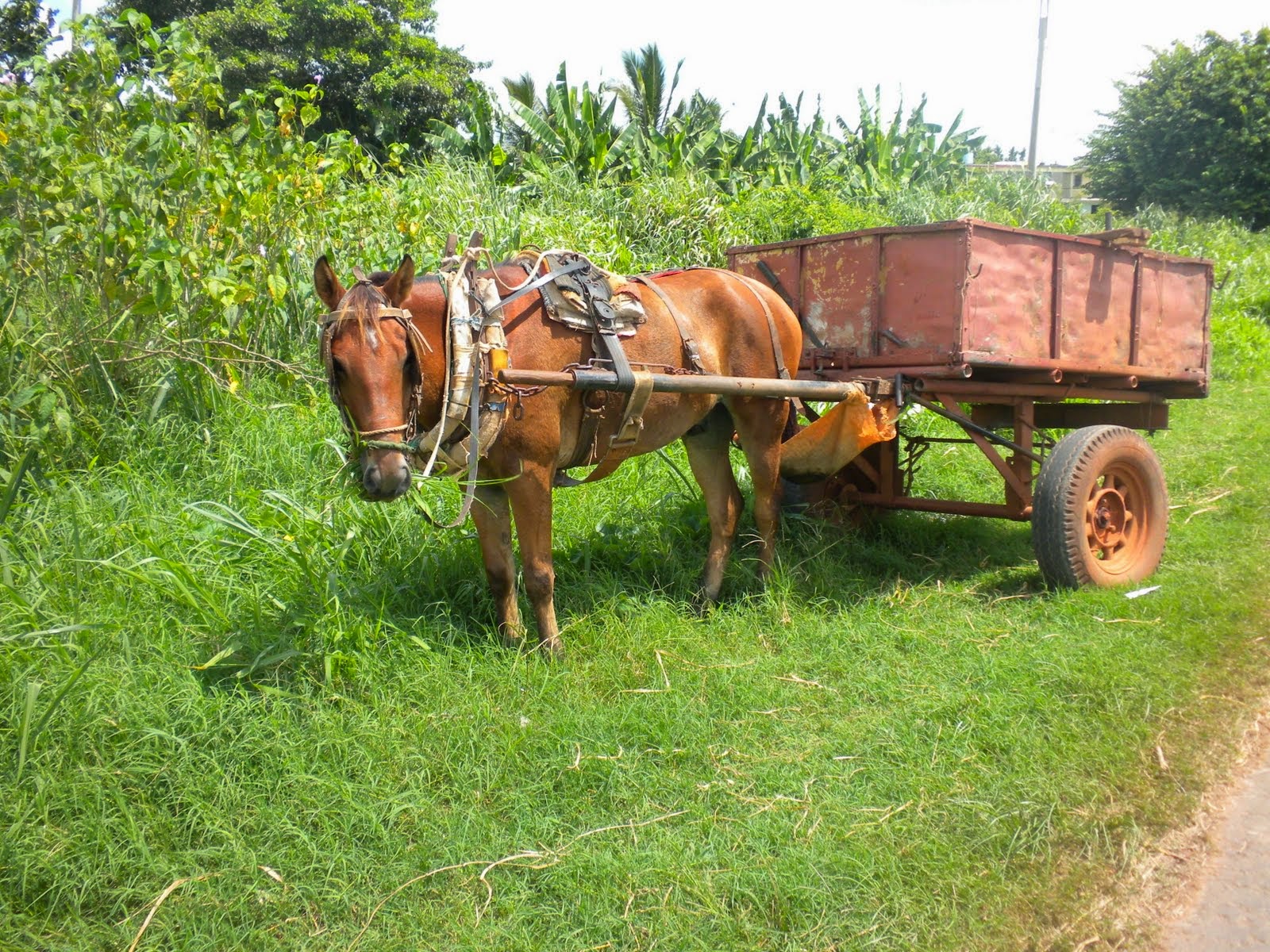
At the same time that these values were implemented and widely adapted, the Cuban people had very little access to resources and emerging technologies that developed and developing nations had; "development" was stymied. Living on an island, land use was maximized where human living was restricted to certain centers with significant but not unbearable density so that land could be used for farming and ecological preservation. Population and health control was implemented through education, societal practices, and proper resources for women and families. Due to lack of petroleum products, such as fertilizers and equipment, farming practices were organic complemented by innovation. Animal use and consumption was regulated by what was available and what was practically needed for health.
DSCN2899.JPG

For so many reasons, Cuba had to and in some cases chose to do things differently from so many countries experiencing development and industrialization. As a result, life looks very different there; but just how different? What does that difference look like?

The Good Ole Days
When I was a child growing up in a decade of significant societal changes--the 80s, when Regan implemented neoliberal economic policies coupled by "trickle down" theory, as well as toppled governments in many parts of the world which didn't conform to US interests, most notably in Central America --it was on a fairly consistent basis I would hear from my elders about "the good ole days."  "The good ole' days," referring to a simpler time guided by particular values and norms--honesty, integrity, community, well-being, concern, care--which they would describe with nostalgia and a certain lament. I didn't know what the good ole days were. All I knew was what  I was experiencing in my life around me, and grew weary of hearing about days gone by.

In 2010, I spent a month in Cuba serving a church as part of a pulpit exchange. It was my second relatively lengthy stay on the island.  My first time was in 2002 for three weeks accompanying a group of economic students. I had a very unfavorable impression of Cuba after my first visit--it was just too different (and this was after having spent two years living in Mexico). But, when I returned, my eyes, ears, and heart had a new openness to being there. After the pastoral exchange, I was commissioned by the people to share their stories and life there as often as I was given an opportunity.  In lectures and presentations and conversations, it is not uncommon for elderly listeners to comment on the way I describe day-to-day life and general health and well-being within the community where we were living by saying, "that's how things used to be here."  It occurred to me that Cuba gave my family and I, to a certain extent, a unique gift--experiencing a form of "the good ole days"...and yes it was very good.
DSCN2667.JPG
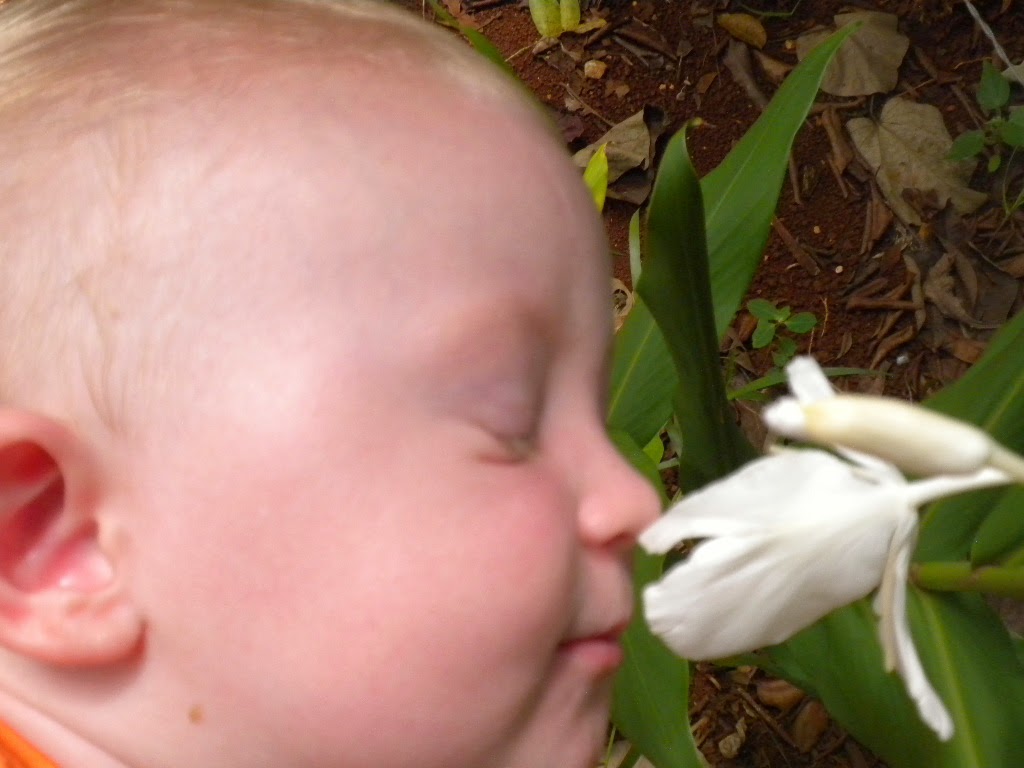
Ruby sniffing the national flower of Cuba - White Ginger Lily - Mariposa

The Cuban people have long suffered during the period of the Revolution. Things have been tight due in no small part to the US embargo; yet, they have learned to cope/live and even celebrate with very little resources relative to their "neighbor" to the north. They have learned to value one another and community more than possessions and the pursuit of  individual wealth and domination of others. Yet, they have been asking for decades for a lift to the embargo.  As I have heard their stories, it is clear, they want access to modernity.

As relationships normalize between the US and Cuba, and the embargo subsides, travel restrictions are lifted, and trade begins, - things in Cuba will change dramatically.  These are the early beginnings of the end of what remains of a form of "the good ole days."  At least, perhaps they are.

This could also be a time when those of us who take interest in the island could approach the island, not with blind ambitions of conquest--"Been there done that," or with a desire to exploit and consume for pleasure or potential economic gain, and not with an intention to "help" or convert the people to the "American way of life" particularly under the auspices of religious motivations; but instead to approach the island nation with openness to learning--with a cup of knowledge not full but that needs to be filled--and gleaning from their reality ways we might make aspects of their reality our own.  This is a unique time in our history. My prayer is that we, as a society with our many gifts but also with abundant flaws, may seize an opportunity to consider something which might not actually be that different from how our society once was.  Most of all, I pray that which is good and honorable in Cuba may be preserved for generations to come as the respective flags are raised on one another's soil.

Two revolutionary combatants, Jose Baujasan and Elandio Aguiar in an interview this morning reflected the changing relations with confidence about going forward. Note the conclusion of Baujasan in his comment:
JOSE BUAJASAN: [translated] We think rapprochement with the U.S. is a success of Cuban policies. They have been unable to destroy us. Now they will use the second lane, as they say. It’s fine. They will come here precisely using the economic problems we have. They will use them. Evidently, they will try to capture people. But we can also teach them many things.
Will people in the U.S. be open to learning?

And this from Eladio Aguiar expressing a determination to hold on to their way of life, and perhaps even subversively influencing the U.S. way of life as well:
ELADIO AGUIAR: [translated] We are prepared for that, for a long fight, and to finally overcome all these difficulties. Of course, we do not expect the U.S. to become a socialist country in the long run. Nor do we claim that, either. But they should at least learn to live civilly with us, who have never caused any harm to the U.S.
Socialism may not be the answer for the Great Turning as described above, and it certainly has it's drawbacks, but perhaps for those who desire a Great Turning the human social experiment that is Cuba may actually provide a insight into possibilities for such a turning. 
Playa Varadero
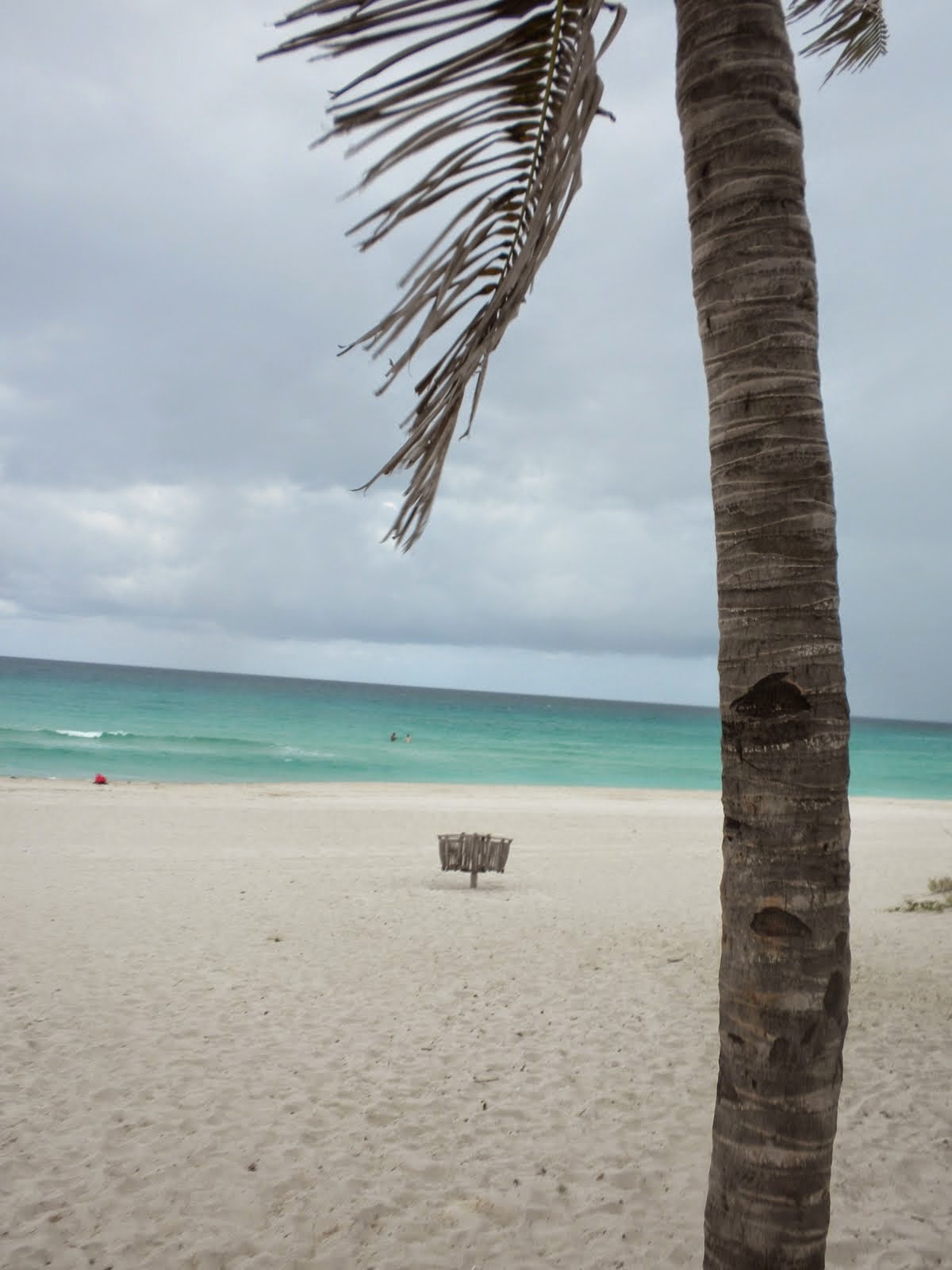
Pristine beaches at Varadero.

Monday, July 27, 2015

Worship at Mother Emanuel AME Church, July 26, 2015


The emotions--grief, anger, resilience, hope, resistance, love--were as palpable as the muggy heat on this July morning.  
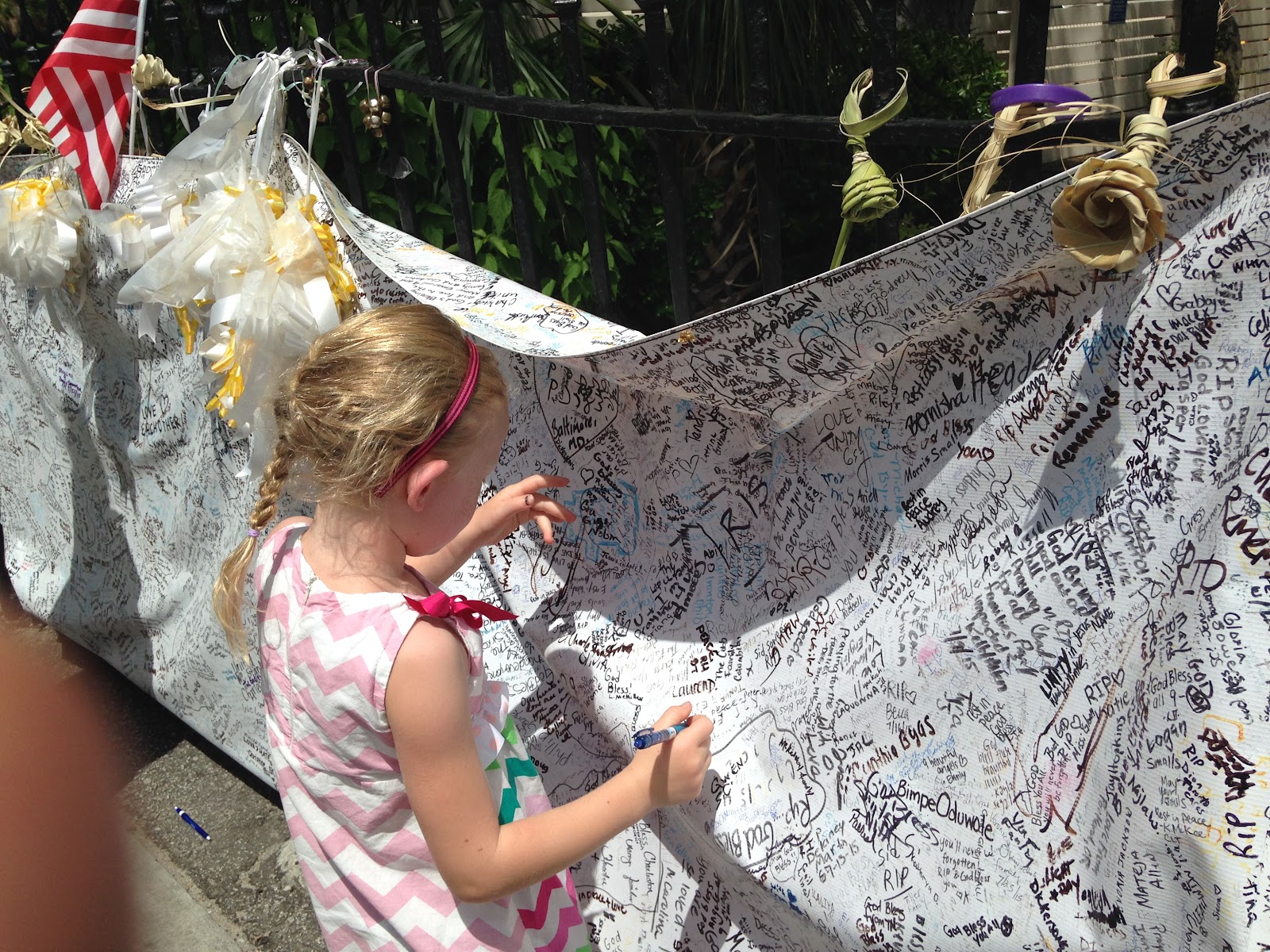
Walking down Calhoun Street, named to honor a defender of slavery, John C. Calhoun, we looked for a steeple, of which there were many, to guide us to our destination. Finally, we arrived at the now unmistakable white faced building with a tall steeple and a proud people called Mother Emanuel AME Church whose slogan on the bulletin reads: “Unashamedly Traditional, Surprisingly Progressive.”  Outside her walls were symbols--flowers and candles, posters of white and black hands fist bumping over a caption, “One Skin,” banners with hanging pens inviting one to add a name to those who care--baring the aforementioned sentiments. It was the setting of a vigil where people come to mourn and pray in the heart of downtown Charleston.
IMG_0411.JPG
We navigated passed tourists taking pictures in order to ascend the stairs leading to the church sanctuary doors. The place which seats some 400 was filled with people who squeezed into its dark-wood cushion-backed pews. Most of those in attendance were familiar with the unairconditioned space as they waved their bulletins to fan them, rocked back and forth to the rhythm of the liturgy, and stood and waved as part of the lively worship; but, a significantly large number of us were new to the place, as we had come to be present and join in the grieving process, and the journey to healing and reconciliation. My family and I were among these hundreds of newcomers who gathered to worship, delighted in the youth praise dancers, sang with a choir and soloists, kneeled to pray together, and were challenged by the word from the Book of Esther given to the preacher, “you gotta speak up!” and share the difference making good news of the gospel.


There was no denying this was a community in mourning, still needing to heal, but it was also a community carrying on with the business of being a gospel people--welcoming the stranger, praying for the sick, serving in the city, seeking to be a beacon of light. The interim pastor, the Rev. Dr. Norvel Goff, Sr., filling shoes lost in a tragedy, was boldly at ease with the congregation and guests. Some guests were invited to come and offer a word to the congregation, including three representatives from various families who were gathered for reunion--two of whom sang solos spontaneously!--as well as an elected official from the Commonwealth of Virginia who joined others in offering words of condolences and encouragement by citing scripture. I loved to hear the minister negotiate with the congregation about how long his sermon might be as the numerous seemingly spontaneous acts were proposed and later agreed upon, "If ya'll give me twelve minutes to let me allow this young man to sing, I'll take 12 minutes from my sermon." It was a beautiful solo by a young man, and elder, visiting from a Church of God in Christ. This was a youth led service, meaning the various aspects of the service were led by the church's young people. 
Ruby Gene and Zia stood mesmerized by the young girls liturgical dance praise team.
 
During the time of prayer, worshippers streamed down the aisles to gather around the altar as the minister uttered a litany promises of God from scripture. Just when most had cleared the altar, a bent over elderly woman, surely a church Mother, dressed elegantly in a blue dress and hat, was escorted by two other women to the altar, where she knelt down to pray, and as she did so, the minister placed his hands on her head and lingered to pray with her as well. 
The sermon was inspired by Esther and Mordecai's willingness to speak up during a threatening time (Esther 4:14-17). Using that underlying theme, the minister encouraged all of us to speak up when we see troubling circumstances, when we see people in need of prayer, when we see injustices, "you gotta speak up"--as it may make all the difference for, even save the lives of, your friends, your neighbors, this country, this world.    
About halfway through the two and a half hour worship service, Trasie took the girls down to the basement/Fellowship Hall where they could be less confined (it was hot and hard to keep them still at this point). The worship service is broadcast on a video stream into the basement and chairs and tables are set up for people to worship there in an airconditioned less formal setting. I joined them after the worship service was over, and saw the community beginning to set up for a meal they would be having later, which explained the fried chicken I smelled as I walked down the balcony stairs!  Completed in 1891, this Fellowship Hall has been home to countless prayer meetings, bible studies, and seniors gatherings, and seen many bellies filled; and is also the place where the Emanuel 9 lost their lives in one horrific act.  It was humbling to witness the welcome and resilience of those most affected by such a tragedy, and join with thousands of others to offer our prayers for healing and reconciliation, and speak up the name, which has come to encompass so much good and inspiration for so many people in this church and community, the name of Jesus-- the Prince of Peace.   
Ruby Gene begged for a picture to be taken with Jordan, a member of the Emanuel AME Church Praise Dancers, July 26, 2015--the Fellowship Hall in the lower level of the church. 


Sunday, June 28, 2015

Intended for Evil, God intends for Good

Commerce Presbyterian Church
Sunday June 28, 2015

A selection of Scripture for this morning:


At the end of the book of Genesis chapter 50, We find the story of Joseph and his brothers. His brother had sold him into slavery.  In an ironic twist, they find themselves at his mercy later in life and here is what Joseph said to them in verse 19 and 20:


‘Do not be afraid! Am I in the place of God?20 Even though you intended to do harm to me, God intended it for good, in order to preserve a numerous people, as he is doing today.


In the gospel of Matthew we find Jesus’ sermon on the mount in which he said...
‘You have heard that it was said, “An eye for an eye and a tooth for a tooth.”
But I say to you, Do not resist an evildoer. But if anyone strikes you on the right cheek, turn the other also; and if anyone wants to sue you and take your coat, give your cloak as well; and if anyone forces you to go one mile, go also the second mile.


‘You have heard that it was said, “You shall love your neighbour and hate your enemy.” But I say to you, Love your enemies and pray for those who persecute you,


And from Paul’s letter to the church in Ephesus:


“...Be imitators of God, as beloved children, and live in love, as Christ loved us and gave himself up for us, a fragrant offering and sacrifice to God.”


The word of the Lord.


People of faith who make particular claims about God have a fundamental problem that cannot be resolved--it is the problem of theodicy--the reality of evil in the world.  


How can God be all good and all powerful and there be evil in the world?
If God is all good and not able to do anything about it, then god is not all powerful.  
Or, If God is all powerful and does not do anything about evil in the world, then how can we say God is all Good?


We try to make sense of it:  
-- it is because of the free-will of humans that evil exists..
-- or it is some third agent, Satan, the devil, who is responsible for evil.
-- Or that evil is part of God’s plan -  


but even in these scenarios an All powerful and All Good God doesn’t fit with the reality of evil. Evil exists…and as people of faith we are called to live and be present in that reality, and work toward resist evil by doing good.


This is the road of discipleship.


Friday, June 26, 2015

imitators of God

“...be imitators of God, as beloved children, and live in love, as Christ loved us and gave himself up for us, a fragrant offering and sacrifice to God.” Ephesians 5:1-2


Jesus never promised the road of discipleship of Jesus would be easy or smooth. Christians can easily fall under the delusion that once we are “saved” or have accepted Jesus as Lord and Savior life will go well for us, be quite straightforward, and we can pretty much continue to live as we had before. This is not what Jesus taught. It seems that once we are “saved” or commit our lives to Jesus the real challenge begins. If we are truly walking in his steps, or being “imitators,” this suggests a pretty radical shift from the way we had been living has taken place; instead of nothing really changing, almost everything changes because, if we’re honest, most of our living focused on fulfilling personal interest and self-preservation. Time and again, Jesus shows the path of discipleship at its core leads to sacrifice after sacrifice for the benefit of others, to the point of losing one’s life.
When we imitate Christ:
- we are living a life of sacrifice, which means living in obedience to God--not my will but thy will;
- we are living in faith not fear. I am told “do not be afraid” appears in some form 365 times in the Bible!
- we are living to be ambassadors of reconciliation; meaning working to tear down walls of division and hatred.
Does this suggest that life in Christ puts one on “easy street” or that everything remains as it was?


I have been deeply challenged by the Emanuel AME Church massacre of nine people studying the Bible in church, and what has come as a result. Major issues that have emerged since the event revolving around such as:
  • guns. Should there be tougher laws restricting possession of guns? Should we be armed in church?
  • systemic and structural racism.  Does it exist? Should there be such separation in communities?  How might these issues be overcome?
  • Symbols--particularly the Confederate battle flag, but also names of Confederate leaders marking places and streets. How should we remember history? Whose history is to being told and commemorated and to what end?


As we approach these conversations, it is important to attempt to distinguish between what we might want to do or what we think is right, and what Jesus would do and our own call to be imitators of God.  WWJD doesn’t get old!  So often we want to hear easy answers, answers that confirm our own opinions, and answers the justify our actions--but does that positioning reflect the nature of discipleship?  
I had lunch with the Rev. Cheryl Barnes of Sardis Presbyterian, a black Presbyterian church in Jackson County. We considered the way the Rev. Pinckney was gunned down in his own church, as was Archbishop Oscar Romero, Martin Luther King, Jr’s mother, the list goes on. Were we to be in that type of situation, Rev. Barnes and I both felt our calling to follow Christ compelled us to a preference of a death while praying rather than a death while trying to defend ourselves, in our own church or anywhere. We took solace in remembering we are witnesses to the resurrection. The path of discipleship is not an easy one.  
It is so powerful to hear and see the way church members have responded to the gunman with words of forgiveness.  Rev. Barnes reflected, had Mr. Roof chosen to carry out his crime in a setting outside the church his intention to incite a race war might have been more successful as there most likely would have been retaliation. But, he went into a church and chose to do battle with Christians who, in obedience, are reacting by taking the steps toward forgiveness and loving their enemy. The path of discipleship is not an easy one.
Seeing the community of Charleston come together to pray and work out differences is inspiring.  There is significant transformation underway there and elsewhere.  My cousin, who lives in Charleston, wrote to me, “It has been a crazy week here as you can imagine. Our community is solid and has responded beautifully..with as much grace and poise as can be expected during a confusing and sad time. I'm proud of my community, and my state.”
During our church service Sunday, June 21, we took time to reflect on our experiences of how we have been made aware of racial differences in our lives, and how we might be ambassadors sent out to do the active work of reconciliation.  For the offertory Jennie Snare played, “Proud to be an American,” which I heard in a different light given the context. May we all emulate the Christlike response my cousin describes of his city, “coming together with grace and poise” by “proudly stand[ing] up next to” brothers and sisters of every race and creed because we are called to live in love. The path of discipleship truly is rewarding.    


God’s Grace and Peace be with you all, each and every day,
Pastor C. Craig Topple

Sunday, April 19, 2015

Day 3: Barefoot Walking

Slide Day 3 – The third week of our look at Celtic Christianity, as guided by Philip Newell’s The Book of Creation. (pp. 33-47)..


The focus for day 3 is looking at how God is a generous God.
The Celts see this generosity displayed through a connection between the gift of creation and the gift of God’s grace.


Emerging with this chapter of Newell’s The book of Creation, are themes echoed on the approaching Earth Day as well as themes lifted up in the national movement for pay raises.
There are challenges as we would hope and expect.
What I love about being in a community of faith is that we don’t have to shy away from challenges, but instead can listen with our own ears and share from our own perspectives what we are hearing.


There is a three level movement in this sermon.
The first is our connection with Creation.
The second, considering how this connection with creation results in the way we treat one another.
And the third, how the gift of creation relates to the gift of grace.


Let’s see what moves in us...


First: Our connection with Creation.
As many of you know, Trasie and I spent 7 brown and cold springs in the high desert of New Mexico before moving back to our home of Georgia…,
it's so wonderful to be back in the south for Spring
Greening all around. plants bursting forth!
The colors on the flowering trees!
breathe in the freshness—as long as you don’t have allergies


[SLIDE TWO VIDEO: IN case our experience of this spring has been damped a bit by recent rain, I came across a brief time lapse video of Nature bursting into Spring…


I absolutely love it.
Creation: God’s word spoken! as we see in Genesis.
What does it mean for us that God Spoke everything into being? Do we believe this?
“All things have come into being through the Word,” says the gospel of John.
The celts affirm all things at heart are a birth or embodiment of God’s word- Christ.


On day three seeds planted deep within the earth--fruit-bearing life hidden within…burst forth.
A clear sign of an abundance of growth and potential.
Born of God, “God saw all the life springing forth from the ground, and said,
It’s all good.’


Goodness is not just a characteristic…
goodness is the very source of life.
Goodness is the essence of life
Our lives and all of creation come from that which is good;
and therefore in essence are good as well.  
Everything and every person in essence is good?

Tuesday, April 14, 2015

Day 2 - Born to be Wild

Chapter 2 - Day 2 (Much of what is sighted here is adapted or directly quoted from Philip Newell’s: The Book of Creation..)

SLIDE: Genesis 1: 6-8 -  (as Translated by J. Philip Newell in Celtic Benediction)
"On the second day the storm kept stirring. It was the wind of new beginnings. God was
saying, “let there be a space for creation.” And the wind carved out a hollow in the deep
waters. It was a cradle for life. Above, beneath and on every side of it were the everlasting
waters. God saw that it was good. It was a place for birth and abundance. And there was
evening and morning, creation’s second day.  
Wild. When’s the last time you used the word wild....? In what context?
- to describe someone’s hair?
- a car ride
- a travel adventure
-  a tattoo  
-  the behavior of a three year old?

SLIDE: STEPPENWOLF
- maybe you were just singing along to a song on the radio...  

Believe it or not, Steppenwolf‘s not far from the aspect of Celtic spirituality we are going to talk about today...

This is week two of what will be our seven week look at Celtic spirituality, during Eastertide.

I feel qualified to talk about Celtic Spirituality because, I’ve seen Braveheart! And more importantly, fortunately there are many good teachers out there about the Celtic Tradition.
One of whom [SLIDE: J. PHILIP NEWELL And The book of J. Philip Newell entitled: The Book of Creation: An Introduction to Celtic Spirituality.  will be our guide]

I met Philip Newell about 7 years ago, and was immediately impressed by his work...
- an evangelist of Celtic Christianity which has come out of primarily the Islands of Great Britain, he hopes to offer a different perspective of Christianity from the the more influential  theologies of Rome and Western Europe,
- He believes it is necessary and helpful
And in reading, talking with, and hearing Newell, I’ve found that, the Celtic perspective to be a breath of fresh air in my own faith seeking understanding.
You may find the same...

Today’s focus--on Wildness! is just another example as to why.
Last week, day 1, God spoke light into existence, a light within, over, behind, beyond all things. The light that shines from all of creation; and Peggy, you captured this beautifully in your testimony last week as you described discovering the light within.  It’s not that foriegn of a concept, perhaps because we know it to already be true.
This week, Day 2 - Wildness of God.